
Why Parents (including me) Prefer Reading Print Books with Their Children

My youngest child started kindergarten this year, and now he’s bringing home easy readers in a royal blue book sack each night.  The books work on high frequency words and read like this:  Look at the horse; Look at the cow; Look at the pig.
“We need to read tonight, Mommy,” my son says with pride.  He can’t wait to be like his older siblings.
Our fall schedule has us constantly running, but I make sure I carve out time to sit down with my youngest and open a book or two.  He crawls into my lap.  We discuss the pictures, and he touches the words as he says them.
It just wouldn’t be the same with an e-book.

Parents and Kids Prefer Reading Print Books Together

At DigitalBookWorld.com you can read about a study recently done by the Joan Ganz Cooney Center in New York that found that 75% of iPad owners still preferred to read print books with their kids.  Fifty percent of the kids surveyed said they preferred print books when reading with parents.  There’s just something about sitting together and actually turning pages that appeals to us, and here are some reasons why:
  • Reading together is quality one on one time for parents and kids
  • Reading print books continues a tradition: I read print books to my kids because I remember my parents reading with me; hopefully my children will have fond memories of reading with me and will also choose to read print books to their kids
  • It’s easy to give print books to children as gifts
  • E-books have distracting content, like games, that pull children out of the act of reading

But e-books are gaining popularity

I realize that publishing is going through big changes.  Digital media is here to stay, and e-books have their benefits.
  • New reading apps are coming out for iPad
  • Companies are offering new digital reading platforms with fewer distracting games
  • E-books are more convenient to carry when traveling
  • Busy parents like giving their kid an e-book to read, especially since many have a “sound out the word” feature

But I still prefer print, and here’s why

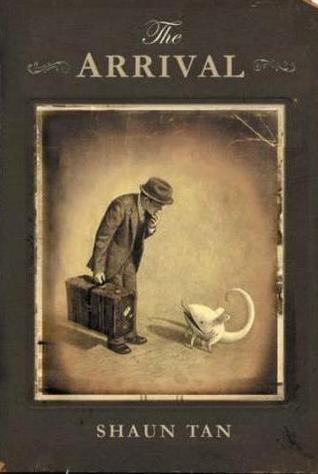
Do you know which book that is?

Part of learning to read is learning about the books themselves- the binding,  pages, and slick covers.  Young readers need these tangible cues for the complete experience.  They also need large, vibrant pictures to go along with text.  I want them to see Eric Carle’s vibrant collages or Mo Willems’ mix of photos and illustrations in full size, on a printed page.  

I admit, I have to make a conscious effort to put that royal blue sack in the van before I take the kids to piano lessons.  It would be much more convenient to pull up a book on my iPhone.
But parenting isn’t about convenience.  It’s about choosing to be present to our children when they need us.  Making the effort, turning the pages, carrying the blue sack.  (Click to tweet if you agree)
  
So, go get a print book and read to a child.  I think you’ll both enjoy it.  
Which book format do you prefer to read with children and why?  Thanks for adding to the discussion.

You might also like:

Julia
Why I Love Perspicacious

It’s quite a word, sitting there under my picture in the right side bar of this blog: perspicacious.  Fun to say.  Try it.  I think it has something to do with the “sp” in the middle.
It’s meaning is even better.  Do you know it?
perspicacious \pər-spə-‘kā-shəs\ adj from Latin perspicere, transparent;  of acute mental vision or discernment.
Now, as much as I love to say perspicacious, I’d also really like to be perspicacious.  So I continually try to educate myself and surround myself with wise people.   And I keep looking up these cool words and sharing them with you. 

Word Nerd Workout

Think of a character from literature that clearly embodies “perspicacious.”  Share your suggestions in the comments.  I’ve got two ideas:
  • Gandalf, from The Hobbit and The Lord of the Rings, but he’s a wizard, so we expect it from him.
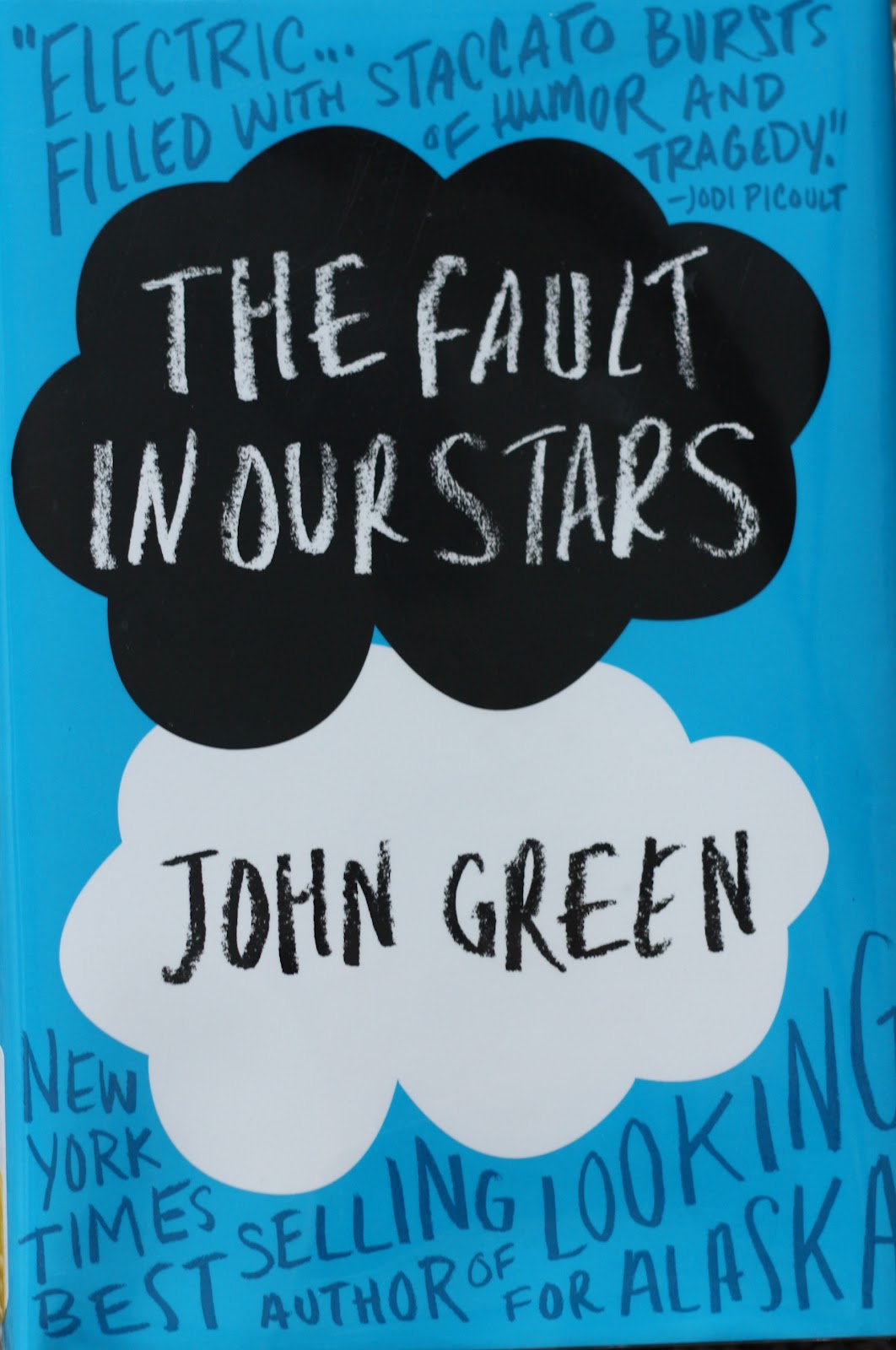
  • How about Hazel Grace Lancaster from The Fault in Our Stars?  She’s only a mortal, but her mortality imparts great wisdom. 

Looking forward to your responses!  Now go out there and be perspicacious!  

Other Word Nerd words:

Julia

Why Not Try a Graphic Novel

How do you get an unenthusiastic reader to take interest in a classic piece of literature?  Or Greek mythology?  Or the anatomy of the eye?
Try a graphic novel.

What are graphic novels?

Essentially, graphic novels are book length stories told with pictures and words in a sequential format.  But the stories aren’t limited to Peanuts comics or the exploits of superheroes.  Modern graphic novels explore themes of adventure, romance, or history. 
According to the Internet Public Library, comics and cartoons have been around for decades, but most experts agree that the first graphic novel appeared in 1978: Will Eisner’s Contract with God and Other Tenement Stories.  Eisner’s graphic novel had adult themes and imagery and was well received by the generation of Americans who had grown up with superhero comics. 

Why are graphic novels gaining popularity?

In our public library I’m seeing more and more graphic novels with quality art work and a surprising variety of topics.   Have you noticed this too?  A few weeks ago, my son picked up a graphic novel about the Greek Goddess “Hera”.  I’m sure he wouldn’t enjoy reading a reference book or article on Hera, but he flipped through the graphic novel within 30 minutes.  And he could tell me some facts about her when he finished.
I’m guessing it has to do with the ratio of pictures to text; less text makes graphic novels less threatening and more fun.
Think about it.  If you had to learn about Norse Gods, wouldn’t it be exciting to actually see them in action?  And to have a face to associate with a strange name like “Loki”, so that you can more easily recall who he is?   Imagine Lord of the Rings or Game of Thrones with illustrations; it would be much easier to remember characters!
We are a very visual culture; it makes sense that a book format that caters to our visual preferences should gain popularity.  And as I have pointed out earlier, boys in particular prefer visual learning

Popular Graphic Novels to Try

Many classics, including Dracula, Treasure Island, and The Odyssey have been published in graphic novel form.  Maybe high school students could reach for the graphic novel instead of the spark notes!  And graphic novels aren’t just for boys; I found one called No Girls Allowed: Tales of Daring Women Dressed as Men for Love, Freedom, and Adventure by Susan Hughes and Willow Dawson.  
Some interesting titles to explore: (click the link for details)

Honestly, I prefer the old fashioned format.  But not everyone loves words as much as I do, and now they have another option.  Check out a graphic novel and let me know what you think, share one with the reluctant reader in your life, or recommend a few titles.  Thanks for stopping by. 
You may also like:

Julia

Why Isn’t October the Eighth Month of the Year?

Giveaway Winner!

Thanks to everyone who stopped by during Banned Book Week to read my posts and comment on expurgated and The Kite Runner.  What wonderful discussion!  I enjoyed hearing from so many readers who share my belief in the value of books, even books with “content”.

Congratulations to Jennifer Brown of thebookienook; she won the Banned Book Week giveaway!  Jennifer, pick a book from the giveaway list, and I will ship it to you.  Please email me with your information so I can send you a great book ASAP.

Word Nerd Note: October

My word nerdy friend Crystal noted that it’s strange that October is the tenth month of the year, since “Oct” means “eight” in Latin.  (think octagon, octogenarian, etc)  Of course, I had to research the issue.
If you want more details, feel free to visit Wikipedia and read the history of our current calendar.  You will find endless paragraphs about lunar years, solar years, and the shifting date of the vernal equinox- stuff to make your eyes  glaze over and your head ache.
Let me hit the high points:

  • The first calendar established by the Romans had 12 months but started in March.  This would make October the 8th month, September the 7th, etc.
  • Sometime during the Roman Empire, officials decided to start the year in January, because the God Janus faced both ways (ie looking back, looking forward).
  • Roman rulers changed the fifth month to July to honor Julius Caesar and the sixth month to August to honor Caesar Augustus.
  • The Roman Calendar was changed to the Julian calendar (when Julius Caesar initiated reforms) and then the Gregorian calendar in 1582 when Pope Gregory XIII instituted reforms.  Our current calendar is the Gregorian calendar.
  • The reforms had a lot to to with making the length of the year consistent and keeping the date of the feast of Easter from shifting too much.  That’s a huge oversimplification, but again, if you want details, read for yourself.  (And if you do, you’re either a bigger word nerd than me, or you just have way too much time on your hands.)

Word Nerd Workout

I dare you to bring up this topic in casual conversation.

“Hey, does anybody know why October is the tenth month of the year?  It should be the eighth.”

Let me know what happens!

Other Word Nerdy Notes:


Julia

Why it’s important to read The Kite Runner

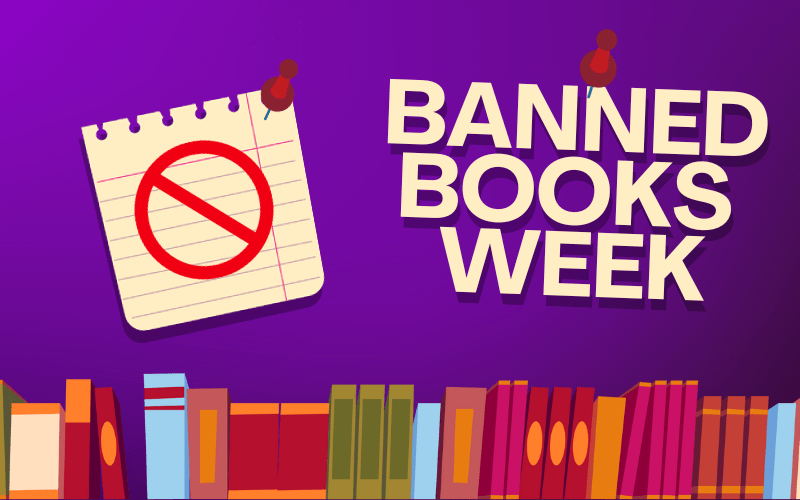
Banned Books Week graphic

My friend Lynne asked at our last book club meeting, “Should I let my daughter read The Kite Runner?” 
Lynne’s daughter is 15, intelligent, and well read.
 
But I remembered one especially brutal scene in The Kite Runner.  Everything else in the book points to it or leads from it, so it’s not something one could skip to avoid being disturbed.

I told Lynne no.

Then I saw The Kite Runner on the banned book list on ALA’s website, and I decided to look at it again.  As I flipped through the opening pages, I remembered why I enjoyed it so much.

Why It’s Great

In The Kite Runner, Khaled Hosseini  tells the story of a man haunted by his childhood.  The opening lines read:

I became what I am today at the age of twelve, on a frigid overcast day in the winter of 1975… That was a long time ago, but it’s wrong what they say about the past, I’ve learned, about how you can bury it.  Because the past claws its way out.

Hosseini vividly describes the tumultuous world of Afghanistan in the late 20th century.  He effectively brings us into a setting so different from America by describing it through the voice of a boy.   Amir experiences emotions we can identify with.  He loves and fears his father, and pines for his approval.  He struggles with jealousy, loyalty, and worst of all, bullies.  One in particular, who worships Hitler, will irrevocably change Amir’s life. 
Throughout all of this, Hosseini weaves the consistent theme of the power of words, the relevance of stories.  His writing is easy to read, yet potent, making it a valuable book.
Hosseini dedicated his book to the children of Afghanistan

Why It’s Controversial

The ALA site reports challenges to The Kite Runner for language and violence.  And yes, it has legitimate examples of both.  By page seven, a main character is assaulted with profanity and obscene gestures.  But, importantly, Hosseini shows how the insults hurt the character; we empathize with his pain.  
The critical scene of the book comes a few chapters later.  Hosseini masterfully describes an act of brutality that one human being imposes on another.  We stand in a cold alley with Amir and watch.  Fear runs through our veins too.
There’s other violence: murders, suicides, war.  But those things happen in Afghanistan and many other parts of the world, and we shouldn’t hide from them.  But do children need to know?  I want to protect my kids as long as possible from learning that bad guys really do exist.  That evil does hold a place in the world.
But by the time kids are in high school, they are learning about the atrocities of World War II.  Most know life isn’t a fairy tale.  They could benefit from learning about the conflicts of the Middle East.

Does it have a place in the classroom or school library?

Honestly, until a few weeks ago, I thought The Kite Runnerwas strictly an adult book.  But I can see potential for learning.  A high school teacher could compliment this book with units on Afghanistan, the Middle East, or Islam.  Reading The Kite Runner could help high school students make sense of the headlines and video clips they see on the news.  It could inspire appreciation for the stability and security we enjoy as Americans.  Most of all, students could learn from Amir’s faults and vow not to repeat his mistakes.
Amir’s father says: “A boy who won’t stand up for himself becomes a man who can’t stand up to anything.”
A worthy sentiment to ponder in any country, at any time, don’t you agree?  Leave your comments below.

So Lynne, I’d let her read it.  But warn her: it can be brutal.  And of course, talk about the book with her.

Note:  Khaled Hosseini has released The Kite Runner as a graphic novel , a format that might be more palatable to reluctant readers.


For more reviews of banned books and giveaways, see Book Journey.


Book Week Giveaway

This week, in honor of the books I love, I am offering a giveaway of one of the following.  All of them have faced challenges or bans in the past few decades, as reported by the ALA website.  All have also been reads I’ve thoroughly enjoyed, as a child and an adult:

  • To Kill a Mockingbird
  • A Wrinkle in Time
  • The Giver
  • The Outsiders
  • The Kite Runner
  • Bridge to Terebithia
  • I Know Why the Caged Bird Sings

How to win?

  • The winner will be picked at random from comments on this post and my vocabulary post on expurgated.   
  • Comments must be made by Oct 8.  The winner will be announced Oct 9 in my vocab post.
  • The giveaway is open to anywhere that Amazon ships.

Julia

The Perfect Vocab Word for Banned Book Week: Expurgated

Last Week’s Quiz Winners

Wow!  I’m happy that so many word nerds turned up for last week’s vocabulary quiz!  I had six winners!  Yippee!  (Next month, maybe I should make a harder quiz…  J)  I’m especially excited to have some new word nerds joining in the fun.  Congratulations to:

I recommended both of these blogs in my post on how to find good book blogs.  Cheers also to:

  • Laura Howard from Finding Bliss, where you can find helpful tips on writing.
  • Susan Stilwell from Blogmama Susan (blogging tips) and I Hope for Him (inspiration)
  • Jane Butler from My Own Personal Sky, where you can find Jane’s thoughts on childhood, parenthood, and seizing the moment.
  • Monique Liddle from Bends in the Road, offering helpful tips for life’s unexpected road blocks.
Enthusiastic *applause* for Monique, a two time winner, and Susan, a three time winner!

This Week’s New Word

Banned Book Week began yesterday, and it has sparked a flurry of commentary in the blogosphere.  While I was reading Jennifer Hartling’s post on BBW, I learned a lot about both sides of the argument, as well as a great new vocabulary word!  Adam from Roof Beam Reader commented that recently an expurgated edition of Mark Twain’s The Adventures of Huckleberry Finn had been published, with all of the offensive language removed. 

First I thought, you can’t alter literature!  That would be like covering up part of a Picasso!
Then I thought, what a great word!

expurgate \’ek-spər-gāt\  verb, from Latin ex + purgare to purge; to cleanse of something morally harmful, offensive, or erroneous, especially to expunge objectionable content before publication or presentation. 

Word Nerd Workout

Use expurgate/expurgated in a sentence to describe your thoughts on the alteration of books.  Would you prefer to read a book that does not have offensive language?  Is this as simple as the difference between “clean” and “dirty” versions of songs?  How do you think altering an author’s words infringes on creative expression?  I wonder what Mark Twain would have to say about this new version of his book.

Banned Book Week Giveaway

This week, in honor of the books I love, I am offering a giveaway of one of the following.  All of them have faced challenges or bans in the past few decades, as reported by the ALA website.  All have also been reads I’ve thoroughly enjoyed, as a child and an adult:

  • To Kill a Mockingbird
  • A Wrinkle in Time
  • The Giver
  • The Outsiders
  • The Kite Runner
  • Bridge to Terebithia
  • I Know Why the Caged Bird Sings

How to win?

  • The winner will be picked at random from comments on this post and my post reviewing The Kite Runner, to appear Friday Oct. 5. 
  • Comments must be made by Oct 8.  The winner will be announced Oct 9 in my vocab post.
  • The giveaway is open to anywhere that Amazon ships.
Easy, right?  Now, share your thoughts on expurgated books below!  Thanks for stopping by!

Julia